1133 Bryan Rd. O'Fallon, MO 63366

The Reason Your Old Dentist Missed That Problem (And Why a 3D Scan Changes Everything)


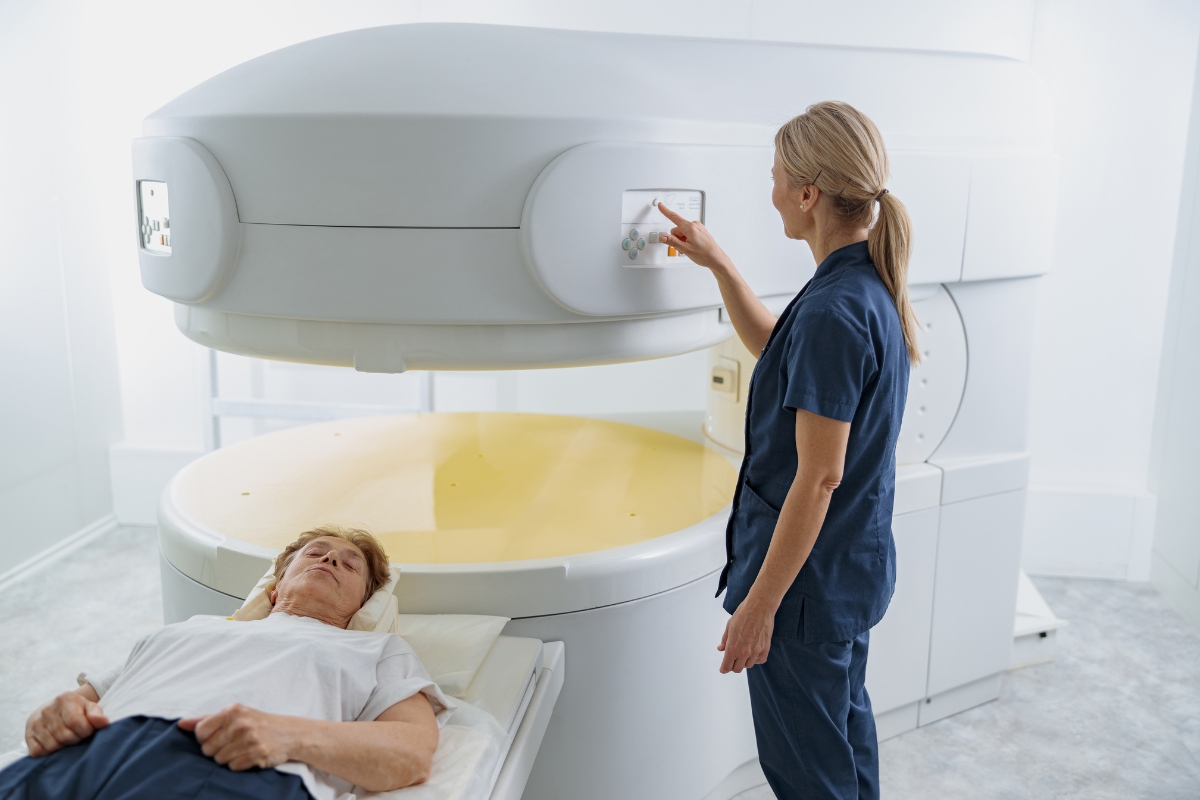
Have you ever felt like your old dentist didn’t fully diagnose the issue you presented? This is a fairly common complaint among patients, and the result is usually a trip to a new dentist for a second opinion. One reason this happens is that 2D dental imaging and diagnostic methods may not reveal everything a dentist needs to see in your mouth. That’s where 3D CT scanning comes in. Where 2D X-rays show you a view of your mouth, 3D scanning gives your dentist a comprehensive, detailed view of your dental structure to detect issues that might otherwise be missed. Let’s see how this amazing 3D scan can benefit you in your dental care.
What Is 3D CT Scanning and Why Is It Important?
3D CT scanning (also known as Cone Beam Computed Tomography) uses an advanced 3D X-ray technology to create clear, accurate 3D images of the teeth, gums, and jawbone. It helps a dentist present you with a full three-dimensional perspective of your mouth rather than the flat, two-dimensional image produced by a traditional X-ray. This can be particularly useful in more complex cases, such as dental implants and assessing the jawbone when wisdom teeth need to be extracted.
When most people hear that their dentist wants to take an X-ray, they think of the procedure as producing a flat image. Unfortunately, most issues in our mouths are hard to detect with 2D X-rays, as they do not show cavities, bone loss, or infections below the gum line. However, dentists who provide 3D CT scanning in O’Fallon, MO can now use the clear to pinpoint these potentially hidden issues.
The Benefits of 3D CT Scanning
Accuracy: Inaccurate diagnostics can result from relying on 2D imaging, as underlying dental issues are often missed. A 3D scan provides your dentist with a highly precise, accurate image to help prevent problems after your initial visit.
Better Diagnostics: 3D scanning enables better diagnosis of problems such as impacted teeth, tumors, and other issues with the jawbone.
Treatment Planning: 3D scans aid in planning procedures for dental implants, extractions, root canals, and more, helping reduce complications during procedures.
Fewer Visits: In some cases, the additional information from a 3D scan means follow-up visits and further tests are unnecessary, saving you time.
Why Traditional X-Rays Miss Problems
While traditional X-rays are a standard procedure in dentistry, they have shortcomings. They provide only one view of the problem, which makes the dentist’s job much harder; it’s easy to miss things when you have only one perspective on the issue, especially when it lies deep beneath the surface of the gums and in the bone.
Issues such as root infections or bone loss may be very difficult to diagnose in traditional X-rays, making a long-lasting, positive treatment plan difficult. Without being able to see them on an X-ray, you can only diagnose them when they become large and quite advanced, making treatments longer and more invasive than if caught earlier.
A 3D CT scan overcomes these limitations by showing the problem from multiple angles at once. It provides a full 3D overview of your oral cavity, giving your dentist a clearer, precise view of any existing or emerging problems and making effective treatment easier.
How 3D Scans Can Help with Complex Procedures
A 3D CT scan can even revolutionize the dental implant procedure. A traditional X-ray can only show the tooth’s general position, making implant placement tricky and requiring significant guesswork. However, with a 3D image of the oral cavity, the dentist can see exactly where the implant needs to go, the available bone structure for the implant, and the exact placement of nerves, ensuring the implant is placed perfectly every time.
This detail will really benefit patients with limited bone structure or those who have previously lost bone. The implant will not need to be surgically fitted using the trial-and-error method, as it can be accurately fitted the first time, without multiple surgeries, with precise information on bone density.
When to Consider 3D Scanning for Your Next Dental Visit
It is time you consider 3D CT scanning in O’Fallon, MO, for all your dental needs. Whether you are coming in for a general check-up or you are scheduled to undergo a dental implant procedure, a 3D CT scan could prove immensely helpful to you and your dentist.
At Twin Oaks Family Dental, we make an effort to offer every available state-of-the-art treatment available to you, so you will always receive a precise diagnosis and effective treatment, including our use of 3D CT scans. We promise to provide a relaxed, comfortable atmosphere for you while offering the latest technology to help you get an accurate diagnosis, ensuring every dental procedure we perform at our practice is accurate and effective.
Book an Appointment Today!
Visit our practice today to see your entire oral cavity. If you are a resident of O’Fallon, MO, be sure to book an appointment with Twin Oaks Family Dental today to benefit from 3D CT scanning in O’Fallon, MO, and ensure that every problem your mouth faces is quickly resolved with our advanced technology so that you can have a confident, healthy smile.
Common Questions People Ask
What is a 3D CT scan used for in dentistry?
A 3D CT scan is used to create detailed 3D images of your teeth, gums, and jawbone, helping to diagnose and plan treatments for conditions such as implants, infections, and bone loss.
How is a 3D CT scan different from regular X-rays?
A 3D CT scan provides a detailed, three-dimensional view of your dental anatomy, whereas X-rays offer a flat, two-dimensional image and may miss deeper issues.
Is a 3D CT scan safe?
Yes, 3D CT scans use minimal radiation and are considered safe for most patients. The benefits of more accurate imaging far outweigh the small exposure.
How long does a 3D CT scan take?
A 3D CT scan typically takes just a few minutes, making it a quick and efficient way to gather valuable information for your treatment.